Stop Waiting Until You’re “Fit Enough” to Start Swimming: A Beginner’s Guide to Getting Started in the UK
“I’ll start swimming when I’m fitter” sounds sensible until you realise it keeps moving your first session further away. Swimming can help you build fitness. You do not need to arrive at the pool already looking or performing like a regular.
Water supports your body weight, reducing the impact on your joints, while its resistance gives muscles throughout your body work to do. That makes swimming an appealing way to get active when running feels uncomfortable or a gym floor feels intimidating. Swim England identifies both full-body exercise and reduced joint impact among its benefits.
The kit list is short: secure swimwear, comfortable goggles, a towel and a cap if your pool requires one. Decathlon’s Nabaiji range offers affordable swimwear, caps, bags and training accessories, alongside other Decathlon-labelled swimming essentials. Current examples include a Nabaiji Kamyla one-piece at £14.99, adult Decathlon XBASE goggles at £5.99 and a Decathlon silicone cap at £2.99.
You can prepare for your first swim without buying a complete training setup.
Why swimming makes sense when you feel out of shape
Swimming combines movement against water resistance with cardiovascular exercise. You can adjust the effort, take breaks and build up gradually.
It also removes the repeated foot-strike impact associated with running. That does not make every stroke suitable for every injury, but it gives many beginners another way to become active.
A few lengths may still leave you breathless. Swimming asks you to coordinate breathing and movement, so unfamiliar technique can make it feel surprisingly demanding. Slow down. Rest. Get help with your stroke if you need it.
Low fitness and limited swimming ability are different starting points. If you cannot swim confidently, float or regain a safe standing position, book adult beginner lessons before trying a lane workout. Swim England highlights adult lessons as a way to build water confidence and skills.
What do you need to start swimming in the UK?
For your first pool visit, pack:
- Secure swimwear: a swimsuit, trunks, jammers or other swimwear accepted by your pool.
- Comfortable goggles: a practical choice for seeing underwater without repeatedly stopping to wipe your eyes.
- A towel: the one you already own is fine.
- A swim cap if required: check the pool’s rules before travelling.
- A bag for wet kit: keep it separate from your dry clothes.
- Any locker requirement: a coin, token or padlock, depending on the centre.
- Water and your booking confirmation: simple things that make arrival easier.
Kickboards, pull buoys, fins and a swim watch can wait. Your first purchase should solve an immediate problem.
Best swimming gear for beginners in the UK: a practical budget shortlist
These are examples to compare, based on UK listings checked on 28 October 2026. Prices, colours, sizes and stock can change. This is a buying guide based on published listings, rather than hands-on product testing.
|
Item |
Example |
Listed price |
Do you need it immediately? |
|
One-piece swimsuit |
Nabaiji Kamyla blue white |
£14.99 |
If you lack suitable swimwear |
|
Adult goggles |
Decathlon XBASE clear lenses, black blue |
£5.99 |
A useful first purchase |
|
Standard cap |
Decathlon silicone cap, black |
£2.99 |
If required or preferred |
|
Long-hair cap |
Nabaiji silicone cap, black |
£7.99 |
If the fit suits your hair better |
|
Kickboard |
Nabaiji swimming pool kickboard, blue |
£6.99 |
Optional training aid |
|
Pull buoy |
Decathlon Swimming Pullbuoy 500, size M |
£6.99 |
Optional training aid |
|
Swim bag |
Nabaiji Club 500, 27 litres |
£14.99 |
Reuse an existing bag first |
Sources: Decathlon UK swimwear, goggles, caps, training-aid and Nabaiji listings.
The listed swimsuit, adult goggles and standard cap total £23.97 before delivery. That excludes pool entry and assumes you already have a towel and bag.
Explore affordable swimming gear at Decathlon and buy only what your first session needs.
Swimwear: choose something you can move in
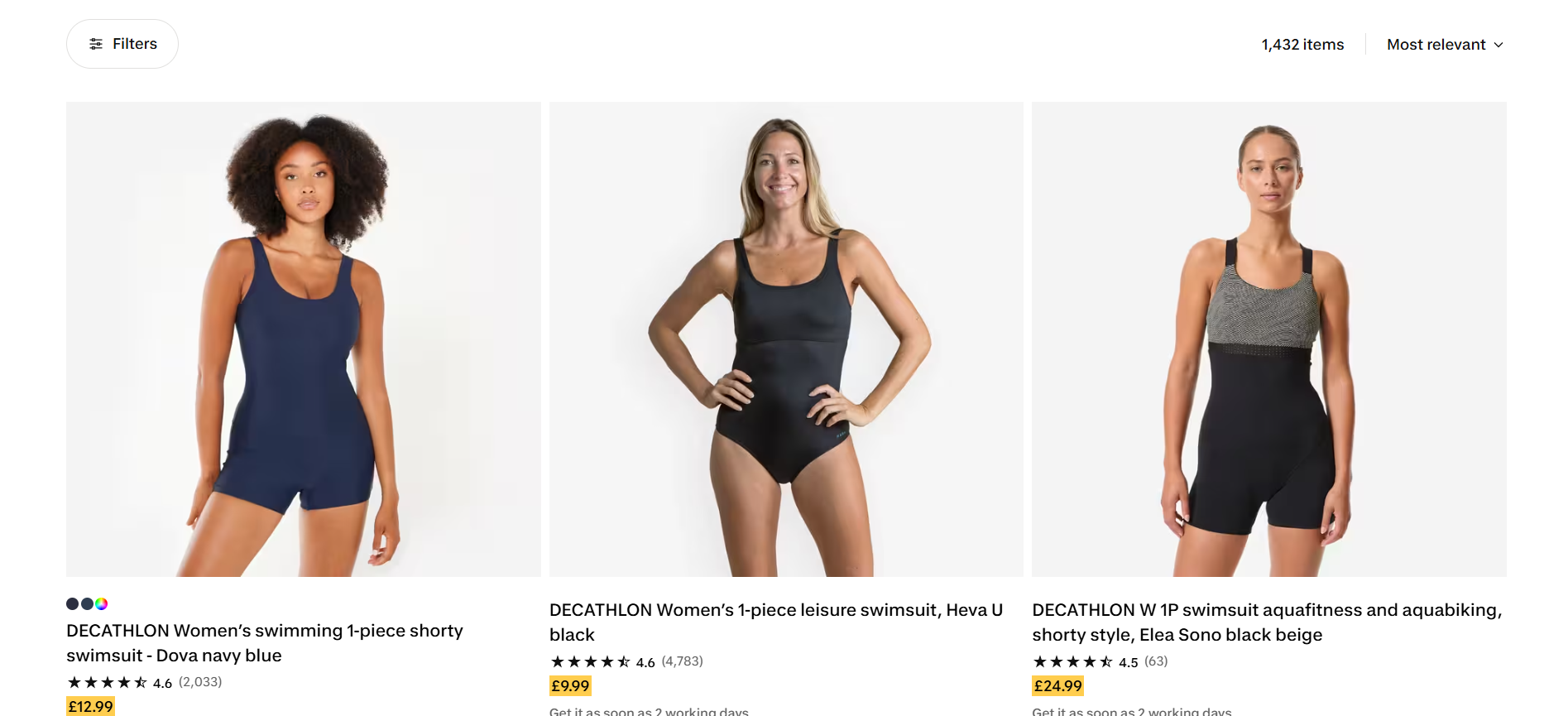
Reach overhead, bend and check that your swimwear feels secure. You should be able to concentrate on the water without constantly adjusting straps or a waistband.
A Nabaiji one-piece is one option; trunks or jammers may suit you better. Check the pool’s clothing policy, particularly if you prefer longer or more covered swimwear.
Goggles: prioritise fit over appearance
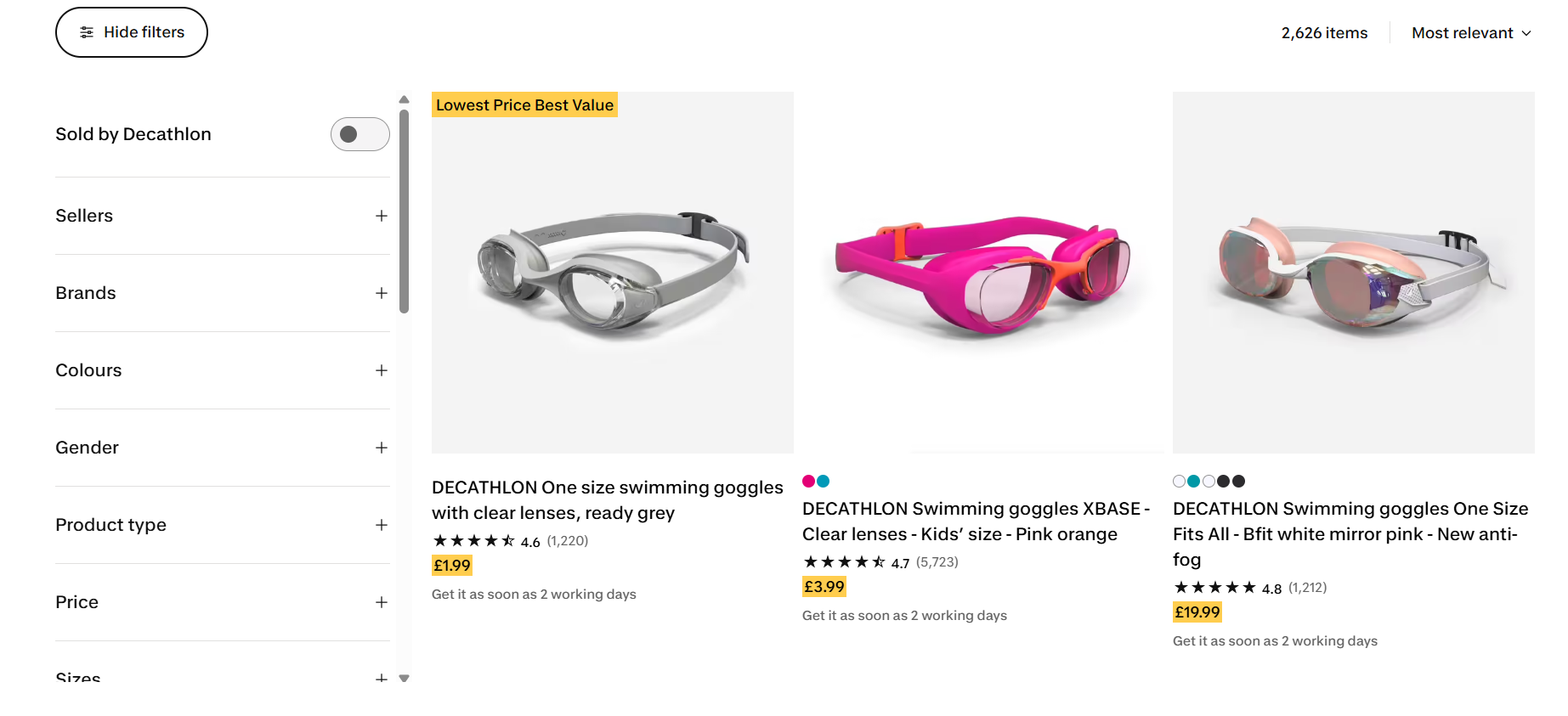
For affordable swimwear and goggles in the UK, a low price is useful only if the fit works.
Look for comfortable eye seals and an adjustable strap. Tightening an uncomfortable pair harder is unlikely to make it a good purchase. Clear lenses are a straightforward option to compare for indoor swimming.
The adult XBASE example above is £5.99. Avoid assuming the cheapest search result is adult-sized; some lower-priced listings are children’s models.
Caps: check the rule, then choose the fit
A cap keeps hair contained, but it does not guarantee dry hair. A standard £2.99 cap may be enough; Nabaiji’s £7.99 long-hair version offers another fit to consider.
Kickboards, pull buoys and swim bags: useful later
A kickboard lets you practise kicking, while a pull buoy supports the legs for drills focused on upper-body movement and technique.
Ask your instructor whether either would help, and whether equipment is available to borrow. Neither is a substitute for swimming ability or supervision.
A dedicated swim bag is convenient once swimming becomes a habit. For now, your existing bag and a separate wet-kit pouch may do the job.
How to start swimming for fitness in the UK
1. Find a session that matches your ability
Use your local leisure centre’s timetable or Swim England’s Poolfinder. Look for adult beginner lessons if you need instruction, or a suitable public or lane-swimming session if you already swim confidently.
Check the entry price, booking requirements, changing arrangements and session duration. Pay-as-you-go lets you try the routine before committing to membership.
2. Remove the uncertainty before you arrive
Ask reception which session is usually quieter and whether caps are compulsory. If changing-room privacy or accessibility matters to you, check the facilities in advance.
You do not have to become more confident before asking these questions. Asking them is part of getting started.
3. Make your first swim deliberately manageable
If you can already swim safely, an introductory visit might look like this:
- Ease in with a few minutes of relaxed movement.
- Swim one comfortable length.
- Rest until your breathing settles.
- Repeat a few times while you remain comfortable and in control.
- Finish with easy movement before you become exhausted.
This is an adaptable example, not a distance target. Follow the pool’s rules, choose an appropriate lane and ask staff about direction and overtaking etiquette. Beginners learning to swim should follow their teacher’s session instead.
4. Book the next visit before the habit disappears
Choose a repeatable time. One manageable weekly appointment is a useful beginning; add sessions or distance gradually as your fitness and confidence improve.
The NHS advises adults to work towards at least 150 minutes of moderate activity or 75 minutes of vigorous activity weekly, alongside muscle-strengthening activity on two days. That is a longer-term guideline, not your first-swim assignment. It also advises speaking to your GP first if you have not exercised for some time or have medical conditions or concerns.
Feeling self-conscious is not a reason to postpone forever
Walking onto the poolside can feel more intimidating than the swimming itself. Give yourself a specific task: find your session, get changed and follow a manageable plan.
You do not need to predict what everyone else thinks. You need a setting where you can participate comfortably.
A quieter session, a friend or an adult beginner class may make that first visit easier. Swim England’s current campaign explicitly encourages newcomers facing confidence, disability or health barriers to find supportive pool sessions.
Where to buy budget swimming accessories in the UK
Decathlon sells online through decathlon.co.uk and lists more than 30 UK stores, giving you options for checking clothing sizes and collecting orders. Check local stock before travelling.
Factor delivery into your budget. Decathlon lists standard home delivery from £2.99 for smaller goods and free standard Click & Collect. Confirm the available service and final charge at checkout.
Compare beginner swimwear and pool accessories at Decathlon, then close the shopping tabs and book your session.
Beginner swimming FAQs
Do I need to be fit before starting swimming?
You do not need to reach a particular fitness target first. Start at an appropriate effort level. If you lack swimming skills or water confidence, adult lessons are the right starting point.
What are the best budget swimming accessories for UK beginners?
Comfortable goggles and a cap, if required, are useful early purchases. A kickboard and pull buoy can wait until an instructor recommends them or you have a clear training purpose.
How much does beginner swimming gear cost?
The listed £14.99 Nabaiji swimsuit, £5.99 adult XBASE goggles and £2.99 standard cap total £23.97 before delivery. Your total will depend on fit, stock and what you already own. Pool entry costs extra.
How long should my first swimming session be?
Keep it manageable and take breaks. If you already swim safely, a short visit with a few comfortable lengths can be enough. Complete beginners should follow an instructor-led lesson rather than a timed fitness workout.
Should I start in a pool or open water?
This guide is for pool swimming. Open water brings additional hazards and requires separate preparation. Start with an appropriate supervised pool session or adult lessons.
The perfect fitness level is not coming before your first session. Pack the basics. Pick the right pool session. Give yourself permission to begin.