
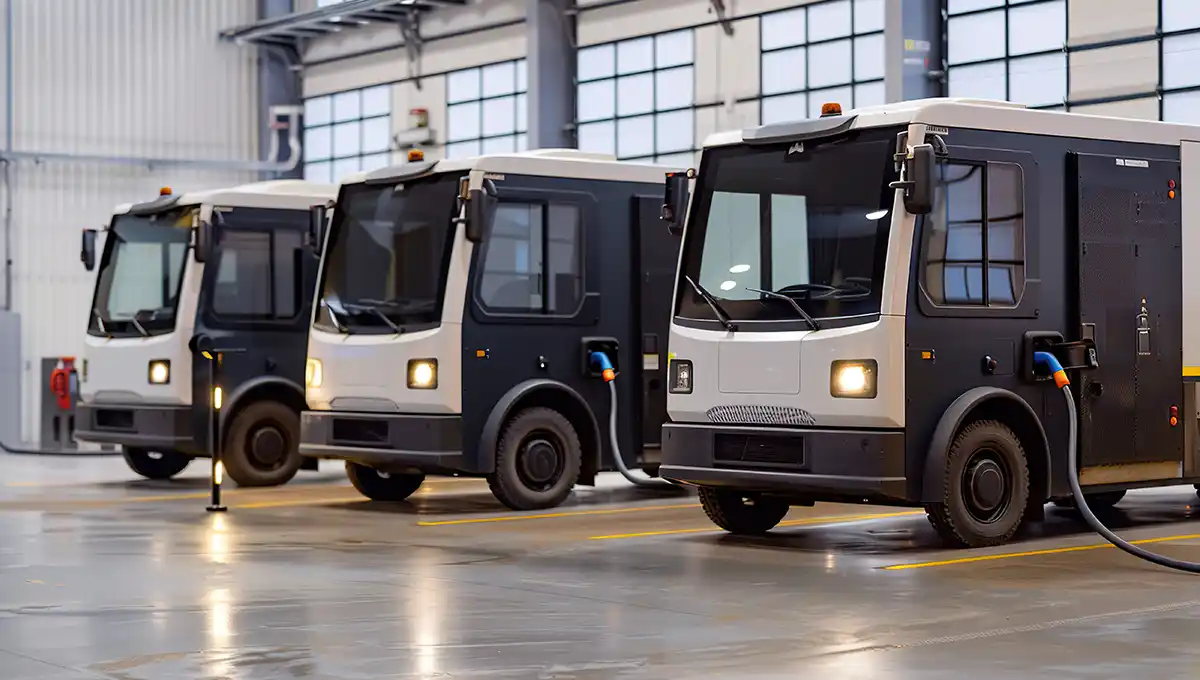
Electric Commercial Vehicles That Help Businesses Cut Fleet Costs Fast
Fuel prices, maintenance issues, and sustainability efforts are making companies rethink their modes of cargo transport and logistics management.
This is precisely why electric commercial vehicles make sense for companies interested in lowering costs without compromising on efficiency. Companies are realizing that electric vehicles can perform their day-to-day tasks much better than anticipated.
Flexible options like commercial vehicle hire and long-term van rental services are making electric vehicle adoption even more convenient for those interested in experimenting with electric mobility.
Companies like Europcar are assisting businesses in identifying realistic fleet options in line with today's requirements.
What Are Electric Commercial Vehicles and Why Are Businesses Switching?
Electric commercial vehicles refer to those that use electricity as a power source in place of the regular engine used in fuel-powered vehicles. These types of vehicles are becoming common since companies are seeking to reduce their costs, save on maintenance, and find an efficient means of transportation.
Electric vehicles have fewer moving parts compared to the traditional ones, hence less maintenance work. In addition to this, companies will be able to advance their sustainability agenda by adopting electric vehicle technology.
Lastly, electric vehicles have increased due to the flexibility that comes with commercial vehicle hire and van rentals. By hiring these vehicles, fleet managers are able to analyze and understand how these vehicles operate before settling down into a more advanced level.
Which Businesses Benefit Most From Electric Commercial Vehicles?
Not every business operates the same way, but several industries are especially well-suited for electric commercial vehicles.
|
Business Type |
Why Electric Commercial Vehicles Work Well |
|
Last-Mile Delivery Services |
Ideal for predictable city routes and frequent stop-and-go driving. |
|
Contractors & Trade Businesses |
Electric vans provide cargo space for tools while lowering fuel costs. |
|
Retail Businesses |
Helpful for local deliveries and temporary transportation expansion. |
|
Catering & Event Companies |
Supports seasonal fleet needs without permanent vehicle ownership. |
|
Maintenance & Repair Services |
Quiet operation and lower maintenance improve daily efficiency. |
|
Small Logistics Companies |
Long term van rental offers scalable fleet flexibility with lower operational costs. |
Buying vs Commercial Vehicle Hire: Which Option Makes More Sense?
- When It Makes Sense to Hire Commercial Vehicles - Hiring commercial vehicles can be a perfect choice for companies that want flexibility and reduced cost commitment with the possibility of fleet augmentation on a temporary basis. In addition, it gives the opportunity to try out electric commercial vehicles before investing in them.
- When It Makes Sense to Buy Electric Commercial Vehicles - Electric commercial vehicles purchase is advisable in situations when a company has constant transportation demands and a substantial number of daily miles driven. This strategy might prove more profitable in the long run in case of consistent delivery routes and reliable access to charging facilities.
How Electric Vans and Trucks Compare to Traditional Commercial Vehicles
Electric vans and trucks offer several advantages over traditional fuel-powered commercial vehicles, especially for businesses operating local or predictable routes. They typically require less maintenance because they have fewer mechanical components, helping reduce servicing costs and downtime.
Electric commercial vehicles also provide quieter operation and smoother driving performance, which can improve driver comfort during daily deliveries or service visits. Many businesses appreciate the lower running costs associated with charging compared to fuel expenses.
However, traditional vehicles may still perform better for long-distance transportation or operations with limited charging access. That’s why many companies are gradually integrating electric fleets through commercial vehicle hire or long term van rental before fully transitioning their transportation operations.
What Businesses Should Consider Before Switching to Electric Fleets
Businesses must assess their operational needs prior to buying commercial electric vehicles.
Route length, charging options, loads, and parking facilities should be assessed first. Companies that use van rental services will have the opportunity to gauge the effectiveness of the vehicles prior to purchasing them.
Rental terms should also be carefully assessed, such as miles, maintenance provisions, insurance coverage, and charging practices.
Fleet managers are becoming aware of the fact that electrification success is dependent upon proper planning just as much as the right choice of vehicles.
A step-by-step approach yields superior outcomes than a one-time switchover to alternative technologies.
Conclusion
It is not only big companies that can consider electric commercial vehicles a feasible reality.
Indeed, today such vehicles are an affordable alternative that is gaining traction because many businesses seek cost savings and modernization of their fleet.
With a wide range of options available such as van rental for business, Pickup Truck Hire, or commercial vehicles hire schemes, businesses have various opportunities for embracing electric vehicles without making major investments.
The most important aspect is to choose an option that meets your company’s requirements and fits your fleet management needs and future growth. This task becomes easier with the help of companies like Europcar which offer flexible fleet solutions. Now is the right time to evaluate whether electric fleets fit your business strategy.
FAQs
-
Which EV commercial vehicle is best?
The best EV commercial vehicle depends on business needs, cargo capacity, route distance, charging access, and daily operational efficiency requirements. -
Who outsold Tesla?
Several global automakers surpassed Tesla in overall vehicle sales, though Tesla remains highly competitive within the electric vehicle market segment. -
Is Tesla producing semi-trucks?
Yes, Tesla produces electric semi-trucks designed for commercial freight transportation with improved efficiency, lower emissions, and reduced operating costs. -
What is cheaper to run, diesel or electric?
Electric commercial vehicles are generally cheaper to run because charging and maintenance costs are usually lower than diesel vehicle expenses.